
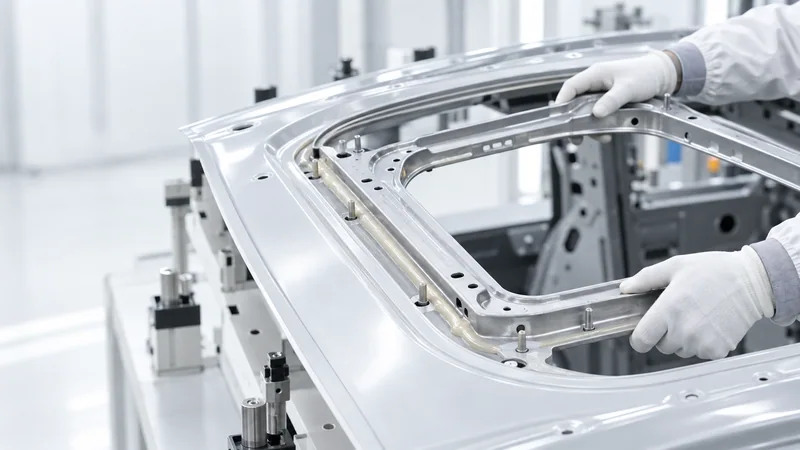
Materials: reinforcement and actual joint surfaces
Provide reinforcement, frame and adjoining substrate materials and coatings, identifying glass, metal or plastic where present. Define adhesive position, joint configuration and load path. Distinguish a designed load-bearing connection from an interface used only for assembly positioning.
- List coatings, primers and cleaning requirements.
- Mark joints, fasteners and nearby drainage.
Process: establish conditions for the selected adhesive
Plan preparation, mixing or dispensing, joint formation and fixation for the independently selected system. Record gap, positioning time, cure and handling sequence. Do not transfer covering-lamination coating, activation or release conditions directly to a reinforcement joint.
- Check joint location, continuity and inspectability.
- Describe assembly variation and fixture conditions.
Validation: establish structural and sealing evidence separately
The responsible customer should define loading, durability and environmental tests for the actual connection and assembly. If the joint also seals, specify leakage and water-management requirements separately. Sealing results cannot replace structural evidence, and structural strength cannot establish sealing performance.
- Record failure location and conditioning changes.
- Separate bonded, fastened and sealed acceptance.
Project preparation: define functions and evidence scope
Submit joint drawings, coatings, geometry, production conditions and customer specifications, identifying assembly decision responsibility. RELANET can discuss adhesive and document needs. R-5670 interior information does not establish sunroof reinforcement suitability; every proposed candidate requires its own relevant validation.
- Identify structural, positioning and sealing functions.
- Provide drawing versions and project stage.