
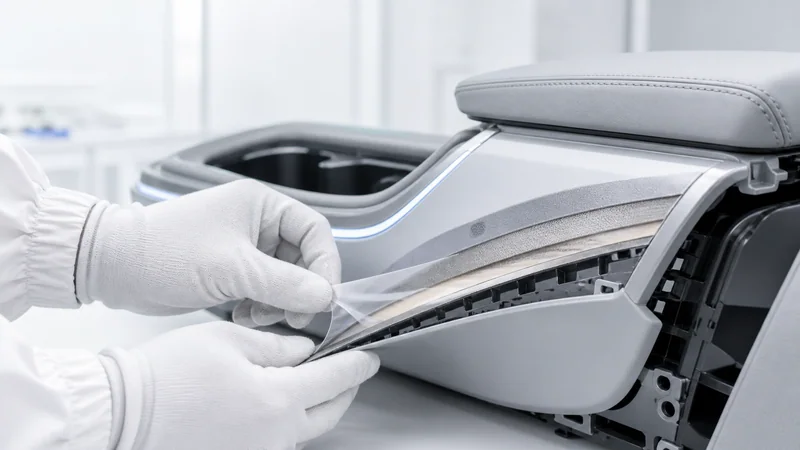
Materials: covering, cushioning and carrier
List the covering backing, foam or other cushioning and carrier grades. Mark every bonded location. Covering-to-cushion lamination, cushion attachment and edge returns can present different contact surfaces; retain separate material information for each interface in the trial record.
- Identify foam skin and existing coatings.
- Mark seams, returns and mechanism boundaries.
Process: wrapping tension and edge positioning
Record covering alignment, stretch, coating area and pressing sequence, with drying or activation conditions. Use support representative of the armrest geometry and check edge holding. Observe whether adhesive or covering enters specified hinge, latch or other mechanism clearances.
- Record the specified cushioning compression setting.
- Inspect corners, seams and released edges.
Validation: repeated compression and opening cycles
Observe the assembly after customer-specified compression, opening cycles and environmental conditioning. Distinguish loose covering, foam damage and interface separation. Record appearance, feel and adhesion separately; peel strength alone does not establish the complete armrest's behavior in use.
- Compare compressed regions with panel edges.
- Record test order and first failure.
Project preparation: define cushioning and mechanism boundaries
Provide the stack, grades, wrapped samples and mechanism layout. State whether this is development or troubleshooting. Agree candidates, current documentation and representative specimens with RELANET before coupon and armrest trials. Conclusions remain limited to the materials and conditions actually tested.
- Provide coating, drying and pressing cycles.
- Include compression, appearance and environmental requirements.