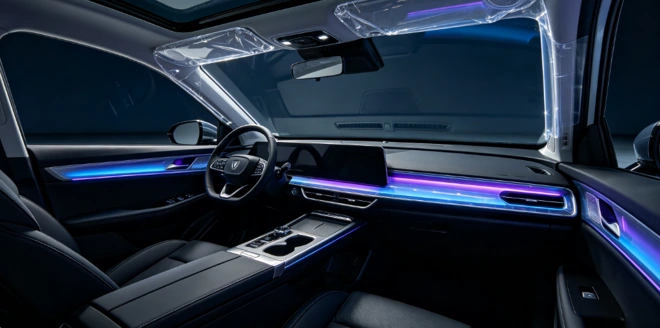
R-5610 is a candidate for adhesive selection in illuminated interiors. Assess the adhesive film separately from the actual laminate. Keep comparison conditions fixed, then examine material and process changes. This guide sets out a checking sequence, not guaranteed optical values.
Examine the film and the laminate separately
Light transmission, haze and the definition of detail describe different optical features. Record the film on its own, then examine the laminate with its skin, adhesive and substrate. A clear-looking film does not establish the same performance in the final stack.
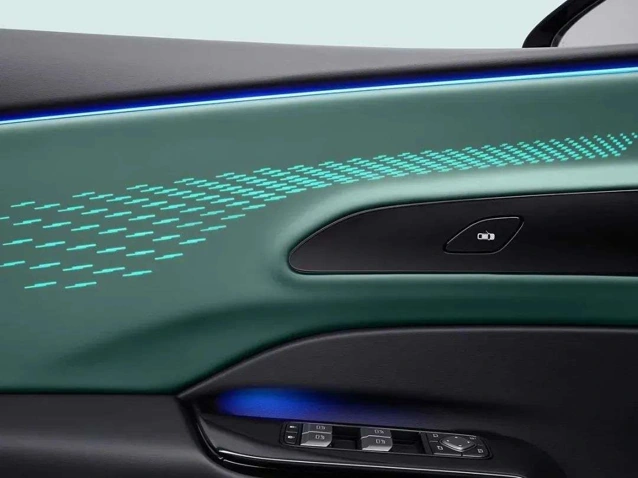
Keep viewing conditions comparable
Record the conditions before comparing specimens. Differences in preparation or photography can otherwise appear to be material differences.
- Use comparable film and material-layer thicknesses and uniform coatings for direct comparisons. Record actual thickness and surface condition.
- Use the same light source, background, viewing direction and distance. Keep photographic exposure settings consistent and record them.
- Keep specimen identities linked to material batches, preparation methods, coating records and drying records.
Separate drying, film formation and crosslinking
Drying concerns water removal. Film formation concerns the continuity of the adhesive layer. Crosslinking, where relevant, depends on the adhesive system. A dry surface or clear appearance does not prove that every required stage is complete. Check the current issued TDS and SDS for components, mixing, drying and evaluation conditions. Confirm them with actual specimens.
Keep a reference when materials or processes change
Give each new combination its own specimen identity when the adhesive, companion component, skin, substrate or treatment changes. Compare appearance and bonding with the previous combination under comparable conditions. Retain the reference specimens, change details, preparation conditions, observations and follow-up requirements. Do not transfer a conclusion from the old combination to a new material.
Understand the limits of photographs and aging results
Photographs record a scene or appearance. They do not replace optical measurement. Accelerated-aging results apply to the tested specimens and conditions. They cannot directly establish guaranteed light transmission or service life. Set separate evaluation methods for optical, bonding and durability requirements. R-5610 parameters and performance still require current issued documents and validation on actual specimens.