
Prepared by Relanet New Materials (Guangzhou) Co., Ltd. · Content updated
- Define the stack
- Record the process
- Run separate tests
- Review the evidence
1. Define representative specimens
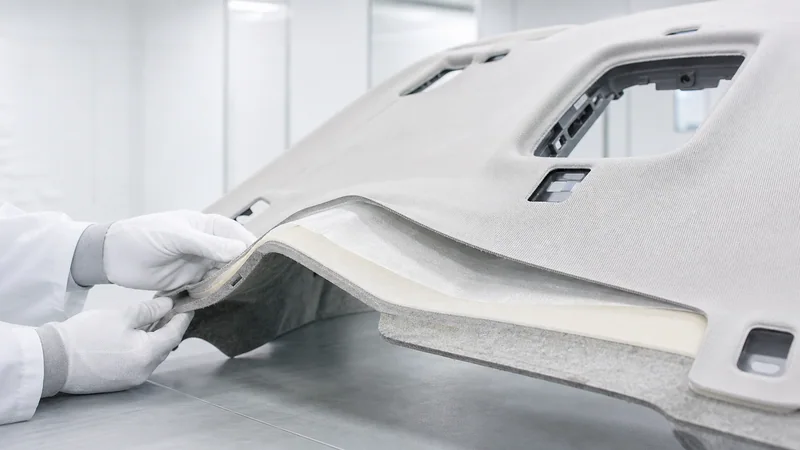
Map the fabric, foam, supporting layer and each adhesive interface. Identify material grades, suppliers, batches, thicknesses and existing surface treatments. Omit a foam layer if the real assembly has none.
Specify sampling location, direction, dimensions, replicates and conditioning. Strip specimens help compare interfaces; curved, edge or assembly samples examine holding and deformation in representative geometry. Neither replaces the other.
- Keep unaged controls and separate trial groups when changing materials, cleaning or surface treatment.
2. Record the process before comparing adhesives
Record adhesive and companion-component names and batches, document revision, weighing method, mixing start, application method and coat weight. Use the current applicable technical data for mixing and use conditions.
Document the environment, drying, activation, pressing and release. Separate equipment settings from measured adhesive-layer or substrate temperatures. Distinguish water removal from heat activation. Mark unknown settings for confirmation.
- Link the operation sequence, unusual observations and photographs to each sample group.
3. Separate the three strength stages
Initial tack describes immediate grab under defined contact conditions. Green strength concerns early handling or holding before full strength develops. Final strength is assessed after specified cure and conditioning. Give each stage its own timing, method and acceptance requirement.
Record peel geometry, speed, specimen width and failure location. Foam or fabric failure changes how a reading is interpreted. A typical one-minute peel value cannot replace the final-strength evaluation for this project.
4. Schedule five evaluation checkpoints
Define requirements and methods before collecting results. Different checkpoints may need different specimens. Agree acceptance values through the applicable customer specification or project test agreement. Keep results marked “Pending test” until traceable records are available.
| Checkpoint | Evaluation | Conditions to record | Result |
|---|---|---|---|
| Initial tack and green strength | Evaluate immediate grab and early transfer/release hold separately | Stack, contact/pressing, elapsed time and method | Pending test |
| Coating sag resistance | Movement, pooling or coverage change in the wet coating | Coat weight, viscosity method, orientation, environment and observation time | Pending test |
| Heat resistance and assembly creep | Displacement, sag and bond retention under defined heat and load | Temperature, duration, load, orientation, geometry and failure criteria | Pending test |
| Humidity aging and hydrolysis risk | Bond changes after conditioning; hydrolysis needs relevant evidence | Cure, humidity/water exposure, temperature, duration and controls | Pending test |
| Final bond strength | Strength and failure mode after specified cure, conditioning and required aging | Cure/conditioning, peel geometry, speed, width and failure location | Pending test |
5. Compare aging results and failure locations
Coating sag occurs before bonding; assembly sag or creep occurs within a bonded structure. Viscosity or thixotropic behavior alone cannot establish headliner shape retention under heat and load. Record these evaluations separately.
After humidity aging, compare strength, appearance, displacement and failure mode. Water uptake, material changes and interface conditions can affect results. Humidity aging alone does not prove a hydrolysis mechanism; define the question and evidence needed.
- Classify interface, adhesive, foam or fabric failure and link photographs.
- Keep anomalous results; do not pool trials with incompatible conditions.
6. Decide the next trial or project step
Connect each result to its requirement, evidence record and decision basis. Missing results or limits remain pending. Possible decisions include further screening, retesting one adjusted variable or advancing to another sample stage.
Share the layer stack, process, failure photographs, customer test requirements and project stage with RELANET. For R-5670 with R-60C, request current TDS/SDS and sample information. Record sample evaluation separately from later production approval.
Questions and answers
Is this plan a headliner acceptance standard?
No. It organizes specimen, process and result records. Confirm methods, sampling, limits and decisions against the customer specification or project agreement.
Does a non-sagging wet coating prevent assembly sag?
Not necessarily. Wet coating behavior and bonded-assembly creep occur at different stages and need separate coating and assembly evaluations.
Has R-5670 passed the headliner tests described here?
This article makes no such claim. R-5670 with R-60C is a candidate for discussion; suitability needs current technical data and traceable project results.