
When automotive interior wrapping develops lifted edges or delamination, the adhesive is not the only thing to check: the condition of the substrate surface it contacts also needs to be established. Oil, mold-release agents, low surface energy or a weakly attached surface layer can all affect subsequent bonding. Substrate treatment should be selected together with the primer, adhesive and application conditions. A single dyne-pen test or contact-angle value is not enough to determine whether a part meets acceptance requirements.
For projects involving the wrapping of PP carriers, RELANET PP primer 132 can be evaluated in samples made with the actual adhesive. Projects that require evaluation of a silane-modified primer can consider RELANET 162 in relation to the actual bonding interface. Before selecting a system, clarify what surface tests can establish, then decide on the treatment method. This usually makes it easier to identify effective improvements.

What contact angle, dyne level and bond strength each tell us
The contact angle is the angle between the tangent to the droplet profile and the solid surface at the point where solid, liquid and gas meet, measured through the liquid. When the same test liquid and measurement conditions are used, a smaller contact angle generally indicates that the liquid wets that surface more readily. A contact-angle report should specify the test liquid, surface condition and time at which the reading was taken.
A dyne pen is used to assess wetting tension under a specified method by observing the spreading and retraction of a test liquid with a known surface tension. It can help check the consistency of surface treatment, but its reading must not be treated as a precise measurement of the solid's surface free energy.
| Check | What it can help determine | What it cannot establish on its own |
|---|---|---|
| Contact angle | How a specified liquid wets the current surface and how wetting changes after treatment | That the actual adhesive will fully wet the surface or form a strong bond after curing |
| Dyne pen or test liquid | Wetting tension under specified conditions and variation between batches | The polar component of surface energy, the formation of chemical bonds or long-term bond reliability |
| Peel, shear and aging tests | Bonding performance for specified materials, specimen preparation and test conditions | That other, unvalidated materials, processes or service environments will achieve the same results |
Contact angle is measured in degrees, denoted by “°”; θ is the symbol used for the angle. Wetting tension is commonly expressed in mN/m or dyn/cm, which have equal numerical values. Writing “100° contact angle” as “surface energy 100” confuses different physical quantities.
A dyne pen marked 38 is not a universal pass criterion for bonding
A dyne pen marked 38 generally contains a test liquid with a nominal surface tension of 38 mN/m. If the liquid trace remains continuous for the specified time, this indicates the wetting behavior of that test liquid under those particular test conditions. It does not directly establish that a particular wrapping adhesive is compatible, and it cannot replace bond acceptance testing on the part.
Statements such as “meets 38 mN/m” or “contact angle below 60°” must be interpreted in the context of the specific material, test method and adhesive system. If comparative tests have established a relationship between surface indicators and bonding results for a project, those indicators can be used for routine process control. Outside the validated conditions, a particular value should not be used as a universal threshold.
Dyne testing should use a consistent test-liquid or pen type, verified usable condition, test location, operating method and reading time. Observation times may differ between test-liquid systems, so “no retraction within two seconds” cannot be applied to every test pen. Carry out the test on a dedicated test coupon or in a location that will not affect subsequent bonding, keeping test-liquid residue out of the production bonding area.
ASTM D2578 addresses the determination of wetting tension on polyethylene and polypropylene films, while ISO 8296 covers plastic films and thin sheeting. Three-dimensional injection-molded parts, fabrics and foams have different surface conditions. The applicability of these methods must therefore be assessed, rather than directly transferring the criteria used for flat films.
A water droplet spreading readily does not establish a strong bond with the actual adhesive
When water is the test liquid, a water contact angle below 90° is generally described as hydrophilic. Waterborne polyurethane adhesives differ from pure water in composition and liquid properties, so the contact angle of a water droplet cannot directly replace an assessment of wetting by the actual adhesive. Water contact angle can serve as a process indicator, but it must first be correlated with test results for the adhesive being used.

Surface roughness, microstructure and liquid uptake also affect readings. On foam, fabric or other porous materials, a droplet may become smaller partly because of absorption and penetration; this does not necessarily mean that the adhesive forms continuous coverage on the surface. Nor will a water droplet with a large contact angle necessarily roll off easily. Assessing droplet movement also requires distinguishing contact-angle hysteresis, roll-off angle and contact-line pinning.
Residues of cleaning agents, surfactants or other substances are another common source of misinterpretation. Water may spread very well over a residue layer even though that layer is poorly attached to the substrate. The observed wetting behavior is not necessarily a measurement error. The real question is whether the surface layer that the adhesive will contact is reliable.
A single water-contact-angle measurement or test with one dyne pen therefore cannot establish that the surface has “sufficient polarity.” Distinguishing the polar and dispersive components of surface free energy requires an appropriate measurement model and several test liquids with known properties. In engineering practice, the result still needs to be confirmed through actual bonding tests.
Remove contamination before selecting surface activation or a primer
Cleaning, abrasion, surface activation and primers serve different purposes. They should be selected and sequenced according to the material and the location of the failure.
Cleaning primarily removes oil, dust, mold-release agents and other contamination. The cleaning agent must be compatible with the material, and residue and recontamination must be controlled after wiping. With PP, wetting and adhesion may remain difficult even after the surface has been cleaned, so compatibility with the adhesive still needs to be evaluated.
Abrasion can change roughness and remove some weak surface material, but contamination should be removed first, followed by abrasion, dust removal and cleaning. A rougher surface alone does not establish that PP is ready for bonding. Thin-walled parts, skins and foams also need to be checked for damage caused by the treatment.
Flame, corona or plasma treatment can be included in the compatibility assessment. Treatment intensity, coverage uniformity and the subsequent waiting time all need to be controlled. Excessive treatment may damage the surface layer, and the treatment effect can change with the material and storage conditions. Line stoppages, shift changes, temporary storage and rework should be included in process validation.
How to select PP primer 132 and silane-modified primer 162 for the bonding system
Wrapping PP carriers: compare 132 with the adhesive in use
For PP bonding projects considering a primer-based process, prepare samples using “actual PP material + RELANET PP primer 132 + intended adhesive,” while retaining an unprimed control group. Keep the substrate batch and subsequent application conditions constant during the comparison, and observe changes in wetting, peel strength and failure location after introducing the primer.
A primer is one possible route for PP bonding. Some specialty adhesives designed for low-surface-energy plastics can also bond directly under defined material and process conditions. Whether to use 132, and whether other surface treatments are also needed, should be determined from the product technical documentation, sample results and production conditions together.
Silane-modified primer: first identify the actual surface layer that 162 will contact
Conventional silane coupling mechanisms depend on surface chemistry. Under suitable conditions, silanols formed by hydrolysis can interact with hydroxyl groups on certain inorganic surfaces, while the organic functional groups need to match the resin system. These mechanisms cannot be directly assumed to apply to untreated PP, and the description “silane-modified” alone does not establish that a primer is suitable for every material.
When evaluating RELANET 162 silane-modified primer, provide the actual substrate and details of its surface condition, and confirm the adhesive to be used afterward. For coated parts, check both the compatibility of the primer with the coating and the attachment of the coating to the underlying material. The specific application scope and application conditions must follow the technical instructions for this grade and the results of sample validation.
Select 132 and 162 separately for their respective bonding interfaces. If a combined treatment is needed, validate the combined process independently. Product names alone are not a basis for applying the two primers over one another or substituting one for the other.
What adhesive application conditions still need to be controlled after priming?
Adding a primer creates both a substrate-to-primer interface and a primer-to-adhesive interface in the bonded structure. The film formed by the primer itself also needs to be checked. Adhesion of the primer to the substrate does not establish that its bond with the subsequent adhesive layer has been validated.
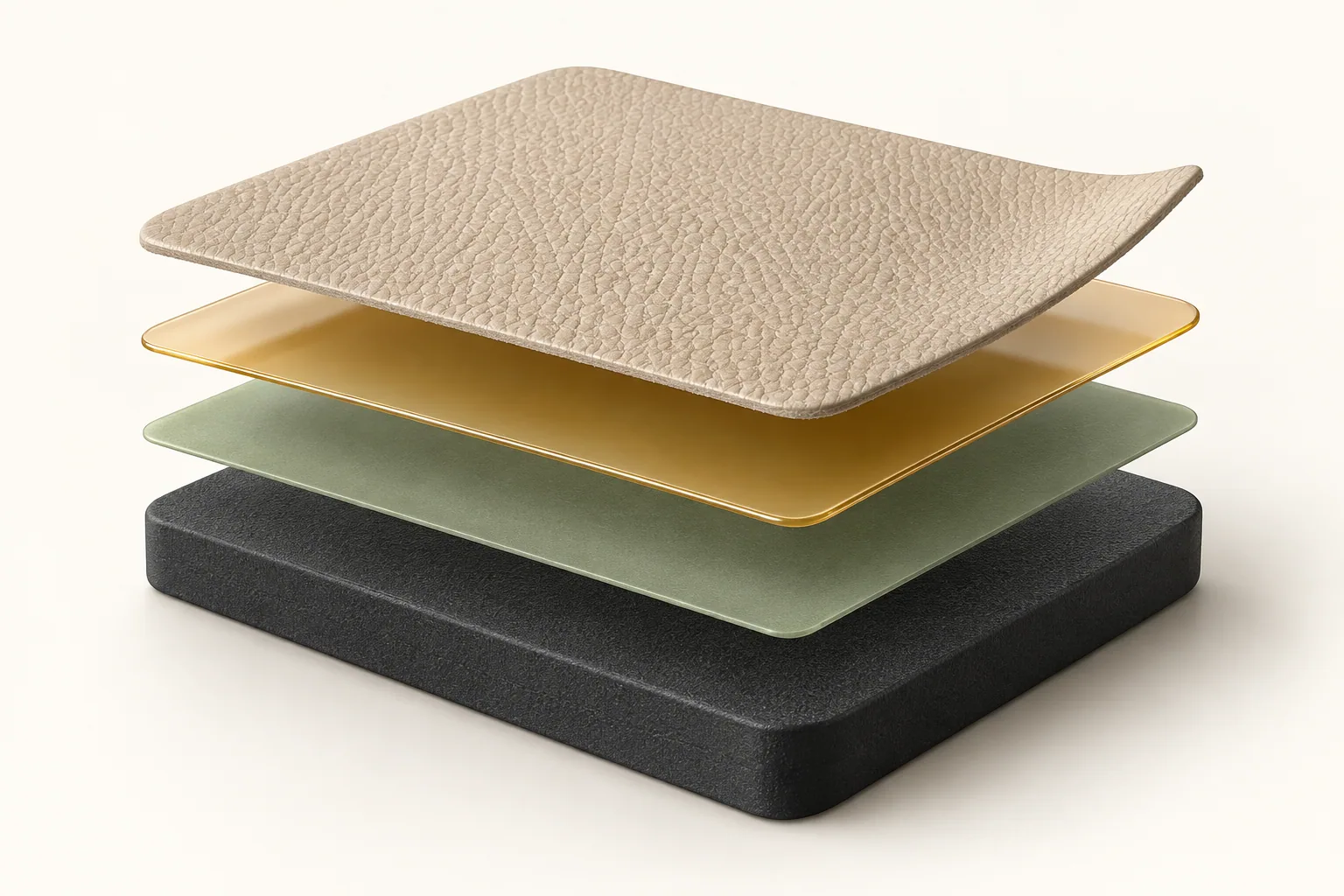
At a minimum, sampling and production records should include:
- The primer application method, amount and coverage, particularly in recesses, corners and along edges.
- The conditions required for the primer to reach its specified dry or reacted state, and the permitted time window for proceeding to adhesive application.
- The adhesive application amount, usable application window and pressing conditions. Two-component adhesives also require metering and mixing as specified.
- The adhesive's drying, heat-activation or curing requirements. Which steps are used, and the degree of control required, must be determined by the actual adhesive system and process.
If debonding persists after surface-test results improve, continue checking the adhesive layer and application process. Record the drying condition of waterborne adhesives, whether adhesive layers requiring heat activation meet the process requirements, and whether actual contact and pressing are sufficient, separately from the surface-treatment records. Simply increasing primer or adhesive application amounts cannot replace investigation of the cause.
Confirm the treatment process using actual materials and aging results
Comparative tests should use the actual production substrate, skin or foam, with other conditions kept as constant as possible. For PP processes that the supplier has confirmed are feasible, compare adhesive application directly after cleaning, use of primer 132 after cleaning, adhesive application after physical activation, and a combination of activation and primer that has been confirmed compatible. For projects considering 162, establish corresponding controls using the substrate and adhesive system appropriate to that primer.
During evaluation, record initial holding performance, strength after the specified curing conditions, and performance after the heat, humidity or cyclic aging required by the project. Also record the locations of interfacial separation, failure within the adhesive layer and substrate failure. Even if foam tears during hand peeling, the result must still be assessed against measured strength and project requirements. Test conditions, the number of replicate specimens and acceptance limits should be agreed before testing begins.
Dyne testing or contact-angle testing is better suited to batch monitoring once a relationship has been established between surface indicators and bonding results. Reassess that relationship whenever the material grade, surface-layer formulation, demolding method or adhesive changes.
When contacting RELANET about PP primer 132 or silane-modified primer 162, provide the substrate grade, surface-layer structure, current adhesive, application process and failed samples together. This information helps define the sampling approach and implement validated material combinations and process conditions on the production floor.
References for Wetting Test Methods
The following standards explain the materials covered by wetting tests and the limits of these methods. They are not evidence of the product performance of primers 132 or 162.